

Search
Recent Posts

October 6, 2026 • 4 Minute Read
Holy Noticing | No. 2
Each Sunday, we end our worship gathering with a benediction - a prayer of blessing designed to help us orient our lives around interacting with God in each moment of our lives. As we’re focusing on Holy Noticing over the next few weeks, we’ll break down each line of the benediction to help focus our thoughts throughout the day on God’s activity in our lives. Our benediction states: May your chief joy in life be the Father’s deep and abiding delight in you! The Lord said to Moses, “Tell Aaron and his sons, ‘This is how you are to bless the Israelites. Say to them: “‘“The Lord bless you
and keep you;
the Lord make his face shine on you
and be gracious to you;
the Lord turn his face toward you
and give you peace.”’ “So they will put my name on the Israelites, and I will bless them.” Numbers 6:22-27 (NIV) Trust in the Lord and do good;
dwell in the land and enjoy safe pasture.
Take delight in the Lord,
and he will give you the desires of your heart. Commit your way to the Lord;
trust in him and he will do this:
He will make your righteous reward shine like the dawn,
your vindication like the noonday sun. Psalms 37:3-6 (NIV) See what great love the Father has lavished on us, that we should be called children of God! And that is what we are! The reason the world does not know us is that it did not know him. 1 John 3:1 (NIV) The most important thing about any of us is what we think about when we think about God. Certainly, it is true when it comes to Holy Noticing. I will not desire to seek God’s face if I am convinced that God is scowling at me, simply watching me with dull-eyed boredom, or even glaring at me, hoping to catch me slipping up so He can punish me. If that’s my picture of God, I will want to hide my face from Him. But if I believe He is as the Scriptures describe His posture toward His children—smiling upon me with favor, His face shining toward me with love—then my eyes will naturally seek out His face. If you spend any time around babies or small children, you notice how much they love to catch your eye. Eye contact is critical to the mental and emotional development of children because it communicates safety, security, and affection. Our God delights in His children. He has lavished His love on us! And He invites us to delight in Him in return. Our chief joy in each moment could be the Father’s deep and abiding delight in us. The goal of our day could be to turn our attention to His presence with us and seek His smiling face. But we must choose this. Otherwise, we will settle for lesser delights. We will spend our moments anxiously trying to find something to enjoy. We’ll obsess over our next meal or an exciting way to spend the night. Or, worse, we might choose to simply zone out and mindlessly entertain our moments away. But there is another way of life—a life of deep joy as I become more and more aware of the Father’s loving delight toward me, where, no matter how boring, difficult, or tiring the circumstances of my day may be, I can delight in the smiling face of my Father. And I might find that His joy is infectious, and it would lead me to share that joy with those He’s given me. What will you choose today?


October 5, 2026 • 4 Minute Read
Holy Noticing | No. 1
Each Sunday, we end our worship gathering with a benediction - a prayer of blessing designed to help us orient our lives around interacting with God in each moment of our lives. As we’re focusing on Holy Noticing over the next few weeks, we’ll break down each line of the benediction to help focus our thoughts throughout the day on God’s activity in our lives. Our benediction states: Go now in obedience and humble service to King Jesus. Therefore if you have any encouragement from being united with Christ, if any comfort from his love, if any common sharing in the Spirit, if any tenderness and compassion, then make my joy complete by being like-minded, having the same love, being one in spirit and of one mind. Do nothing out of selfish ambition or vain conceit. Rather, in humility value others above yourselves, not looking to your own interests but each of you to the interests of the others. In your relationships with one another, have the same mindset as Christ Jesus: Who, being in very nature God,
did not consider equality with God something to be used to his own advantage;
rather, he made himself nothing
by taking the very nature of a servant,
being made in human likeness.
And being found in appearance as a man,
he humbled himself
by becoming obedient to death—
even death on a cross! Therefore God exalted him to the highest place
and gave him the name that is above every name,
that at the name of Jesus every knee should bow,
in heaven and on earth and under the earth,
and every tongue acknowledge that Jesus Christ is Lord,
to the glory of God the Father. Philippians 2:1-11 (NIV) Our life with God begins, not with a choice on our part, but with God’s choice. Our life is a response to the love of God shown to us through Jesus—the love of God that led Jesus to give up the glory of angels’ praise and perfect splendor to take on flesh and blood to live among us; the humility of Christ that left the riches of heaven to become poor and take on the very nature of a servant; the obedience of Christ to follow His Father’s will even to death. It is by this great love of God that we are invited to share life with the Father, Son, and Spirit. And it is in response to this love that we choose to follow Christ’s example in the ordinary, day-to-day moments of our lives. We, too, must live in obedience and humble service to the King who gave His life for us. The humility required to live a life of obedience to Christ is described by the apostle Paul as “doing nothing out of selfish ambition or vain conceit.” Each day, we are presented with endless agenda items, to-do lists, and appointments that we must meet. And in each of those encounters, it is natural to focus on what we want to accomplish or get out of the situation. But a life of Holy Noticing is one where I am learning to be aware of God’s will in each moment—a life of noticing that God is at work around me, and He is inviting me to lay down my agenda so I may live by His will. So today, begin praying everywhere you go: “Father, open my eyes to see. Open my ears to hear. Open my hands to give, that your will may be done in me.” And as you do, allow the Spirit of God to lead you in humility to look less at what you want to see done, and instead to look to what God would want done—for the person in front of you or this work assignment on your desk. God has a way He desires the world to function, and He is at work making it so. Will you join Him?

October 2, 2026 • 4 Minute Read
Parable of the Sheep and the Goats
“When the Son of Man comes in his glory, and all the angels with him, he will sit on his glorious throne. All the nations will be gathered before him, and he will separate the people one from another as a shepherd separates the sheep from the goats. He will put the sheep on his right and the goats on his left. “Then the King will say to those on his right, ‘Come, you who are blessed by my Father; take your inheritance, the kingdom prepared for you since the creation of the world. For I was hungry and you gave me something to eat, I was thirsty and you gave me something to drink, I was a stranger and you invited me in, I needed clothes and you clothed me, I was sick and you looked after me, I was in prison and you came to visit me.’ “Then the righteous will answer him, ‘Lord, when did we see you hungry and feed you, or thirsty and give you something to drink? When did we see you a stranger and invite you in, or needing clothes and clothe you? When did we see you sick or in prison and go to visit you?’ “The King will reply, ‘Truly I tell you, whatever you did for one of the least of these brothers and sisters of mine, you did for me.’ “Then he will say to those on his left, ‘Depart from me, you who are cursed, into the eternal fire prepared for the devil and his angels. For I was hungry and you gave me nothing to eat, I was thirsty and you gave me nothing to drink, I was a stranger and you did not invite me in, I needed clothes and you did not clothe me, I was sick and in prison and you did not look after me.’ “They also will answer, ‘Lord, when did we see you hungry or thirsty or a stranger or needing clothes or sick or in prison, and did not help you?’ “He will reply, ‘Truly I tell you, whatever you did not do for one of the least of these, you did not do for me.’ “Then they will go away to eternal punishment, but the righteous to eternal life.” Matthew 25:31-46 (NIV) Reflection We can easily slip into a transactional narrative about faith: assuming that serving the hungry, visiting the sick, or welcoming the stranger are just heavy religious chores we must endure to earn a reward at the end. Like the older brother in the story of the prodigal son, we act like slaves sweating in the field, waiting for a payout, while viewing God as a strict overseer keeping score. Jesus completely reverses this mindset in the Parable of the Sheep and the Goats. Notice that the righteous are genuinely surprised when the King says they served Him: "Lord, when did we see you hungry or thirsty?" They weren't punching a spiritual timecard, keeping a spreadsheet of their good deeds, or trying to negotiate a contract for heavenly bonuses. They were simply joining God in His work—caring for the broken because they shared their Father's heart. The generosity of God is not that He hands out calculated rewards for our labor, but that He gives us Himself. When you step out to serve the vulnerable, you aren't slaving away for a distant God to get a prize later; you are stepping directly into the presence of Jesus. The reward of the Kingdom isn't just something He gives you down the road—it is the joy of being with Him right now in His work. Reflection Question When you serve or give to others, are you doing it out of a transactional sense of duty, or out of a simple desire to be with Jesus and share in His heart? Prayer King Jesus, save me from treating life with You like a transaction. Free me from keeping score of my efforts, and give me the joy of simply being with You as I join in Your work of loving the vulnerable today. Amen.

October 1, 2026 • 3 Minute Read
Parable of the Faithful Servant
“Therefore keep watch, because you do not know on what day your Lord will come. But understand this: If the owner of the house had known at what time of night the thief was coming, he would have kept watch and would not have let his house be broken into. So you also must be ready, because the Son of Man will come at an hour when you do not expect him. “Who then is the faithful and wise servant, whom the master has put in charge of the servants in his household to give them their food at the proper time? It will be good for that servant whose master finds him doing so when he returns. Truly I tell you, he will put him in charge of all his possessions. But suppose that servant is wicked and says to himself, ‘My master is staying away a long time,’ and he then begins to beat his fellow servants and to eat and drink with drunkards. The master of that servant will come on a day when he does not expect him and at an hour he is not aware of. He will cut him to pieces and assign him a place with the hypocrites, where there will be weeping and gnashing of teeth. Matthew 24:42-51 (NIV) Reflection When Jesus warns us to "keep watch" because the Son of Man will come like a thief at an unexpected hour, we can easily project a paranoid narrative onto God. We imagine a Master who wants to catch us off guard—a perfectionist waiting to drop in unannounced just to catch us slipping. On the flip side, when His return feels delayed, we can default to the wicked servant's lie: "My master is staying away a long time." Believing the Master is absent or indifferent, the wicked servant turns inward, abusing those around him and living solely for his own comfort. Jesus dismantles both false narratives. True readiness isn't about walking on eggshells out of fear, nor is a delay an excuse for spiritual apathy or self-indulgence. The faithful servant isn't paralyzed by panic or living recklessly; he is simply at his post, doing what the Master entrusted him to do—feeding and caring for the household. Readiness for the King isn't about scrambling at the last minute or obsessing over a timeline. It is the steady, faithful choice to live every ordinary day aligned with the Master’s heart, caring for His family and joining in His work until He arrives. Reflection Question Has the "delay" of Christ’s return led you to slip into spiritual apathy or harshness toward others, or are you actively caring for the people He has placed in your life? Prayer Lord Jesus, guard my heart against the lie that You are distant or indifferent to how I live today. Deliver me from both fear and apathy, and teach me to live with steady faithfulness, caring for Your people until You return. Amen.

September 30, 2026 • 3 Minute Read
Parable of the Wicked Tenants
“Listen to another parable: There was a landowner who planted a vineyard. He put a wall around it, dug a winepress in it and built a watchtower. Then he rented the vineyard to some farmers and moved to another place. When the harvest time approached, he sent his servants to the tenants to collect his fruit. “The tenants seized his servants; they beat one, killed another, and stoned a third. Then he sent other servants to them, more than the first time, and the tenants treated them the same way. Last of all, he sent his son to them. ‘They will respect my son,’ he said. “But when the tenants saw the son, they said to each other, ‘This is the heir. Come, let’s kill him and take his inheritance.’ So they took him and threw him out of the vineyard and killed him. “Therefore, when the owner of the vineyard comes, what will he do to those tenants?” “He will bring those wretches to a wretched end,” they replied, “and he will rent the vineyard to other tenants, who will give him his share of the crop at harvest time.” Jesus said to them, “Have you never read in the Scriptures: “‘The stone the builders rejected
has become the cornerstone;
the Lord has done this,
and it is marvelous in our eyes’? “Therefore I tell you that the kingdom of God will be taken away from you and given to a people who will produce its fruit. Anyone who falls on this stone will be broken to pieces; anyone on whom it falls will be crushed.” When the chief priests and the Pharisees heard Jesus’ parables, they knew he was talking about them. They looked for a way to arrest him, but they were afraid of the crowd because the people held that he was a prophet. Matthew 21:33-46 (NIV) Reflection The tenants in this parable built a massive delusion in their minds: if they could just beat the servants and murder the landowner's son, the vineyard would become theirs. They mistook the landowner's absence and patience for weakness, believing they could seize ultimate control and run the place on their own terms. This reveals a core lie that humans believe: that our lives, resources, and gifts belong to us, and that God is an intruder trying to take what we've earned. We act like owners rather than stewards, guarding our time, money, and position against the demands of the True Owner. But the vineyard was never theirs. Everything we hold—our abilities, homes, and time—is a gift given by a generous King. Life with God flourishes when we drop the defensive stance of ownership and gladly offer the fruit of our lives back to the Son. Reflection Question What is one resource or area of life you have been treating as exclusively "yours" rather than something entrusted to you by God? Prayer Owner of all things, forgive me for grasping at control and claiming Your gifts as my own creations. Remind me that I am a steward in Your vineyard, and give me joy in yielding fruit to You. Amen.
September 29, 2026 • 2 Minute Read
Parable of the Two Sons
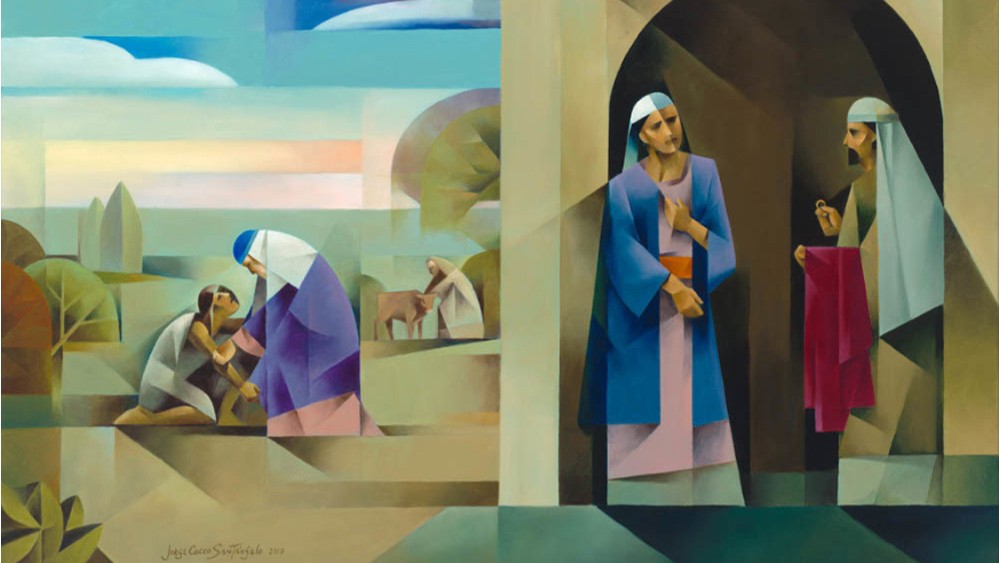
“What do you think? There was a man who had two sons. He went to the first and said, ‘Son, go and work today in the vineyard.’ “‘I will not,’ he answered, but later he changed his mind and went. “Then the father went to the other son and said the same thing. He answered, ‘I will, sir,’ but he did not go. “Which of the two did what his father wanted?” “The first,” they answered. Jesus said to them, “Truly I tell you, the tax collectors and the prostitutes are entering the kingdom of God ahead of you. For John came to you to show you the way of righteousness, and you did not believe him, but the tax collectors and the prostitutes did. And even after you saw this, you did not repent and believe him. Matthew 21:28-32 (NIV) Reflection The first son in Jesus’ story flatly refused his father’s request to work in the vineyard, but later changed his mind and went. The second son gave a polite, spiritual answer—"I will, sir"—but never set foot in the field. Jesus uses this simple story to confront the religious elite who believed their status, heritage, and outward compliance guaranteed them the front row in God's Kingdom. We often believe the narrative that religious credentials, correct terminology, and surface-level agreement make us "first" in line with God. But Jesus drops a bomb on that entitlement: tax collectors and prostitutes—people who initially said "no" to God's ways but later repented—are entering the Kingdom ahead of the polished religious establishment. God isn't looking for polite lip-service that leaves our lives unchanged. He honors the raw, honest heart that turns toward Him, proving that no one is too far gone to step into the Father's vineyard, and no one is too religious to need repentance. Reflection Question Is there an area of your life where you have given God a polite "yes" in words, but have failed to follow through with your actions? Prayer Lord, deliver me from the trap of empty religious performance. Give me an honest heart that moves past lip-service into genuine obedience and active surrender. Amen.
