

All Authors


October 8, 2026 • 4 Minute Read
Holy Noticing | No. 4
Each Sunday, we end our worship gathering with a benediction - a prayer of blessing designed to help us orient our lives around interacting with God in each moment of our lives. As we’re focusing on Holy Noticing over the next few weeks, we’ll break down each line of the benediction to help focus our thoughts throughout the day on God’s activity in our lives. Our benediction states: As He sends you into the world to pursue the ones He is pursuing. Then Jesus told them this parable: “Suppose one of you has a hundred sheep and loses one of them. Doesn’t he leave the ninety-nine in the open country and go after the lost sheep until he finds it? And when he finds it, he joyfully puts it on his shoulders and goes home. Then he calls his friends and neighbors together and says, ‘Rejoice with me; I have found my lost sheep.’ I tell you that in the same way there will be more rejoicing in heaven over one sinner who repents than over ninety-nine righteous persons who do not need to repent. Luke 15:3-7 (NIV) On the evening of that first day of the week, when the disciples were together, with the doors locked for fear of the Jewish leaders, Jesus came and stood among them and said, “Peace be with you!” After he said this, he showed them his hands and side. The disciples were overjoyed when they saw the Lord. Again Jesus said, “Peace be with you! As the Father has sent me, I am sending you.” And with that he breathed on them and said, “Receive the Holy Spirit. If you forgive anyone’s sins, their sins are forgiven; if you do not forgive them, they are not forgiven.” John 20:19-23 (NIV) One of the most remarkable things about God is that He doesn’t wait for His lost children to come to Him. Jesus describes the Father as a good shepherd on a tireless search for His lost sheep—not out of obligation, but from the anticipation of great rejoicing when the sheep is found. It’s the Father’s love that compels Him to seek those who don’t yet know they’re lost, and in His love, He has invited us to join Him in the search. After His resurrection, Jesus told His followers that He was sending them out just as the Father had sent Him. He filled them with His Holy Spirit and gave them the authority to proclaim the good news that Christ is forgiving sins and calling lost children home. And this same ministry has been passed on to you and me. Holy Noticing is not simply about becoming more aware that God is with me, but in becoming aware that the Spirit of God, who is alive and active in my life, is also active in the lives of those who don’t yet know His name. He is bringing conviction to their hearts, awakening a desire for life with Him—though they may not recognize this desire in themselves. But Christ has sent His followers out to join the Father in His pursuit of the one lost sheep. So this week, as you’re going around praying for God to open your eyes and ears and hands, would you begin to turn your attention to who God has placed in your life? Who are the people you see throughout your week—friends, neighbors, coworkers, and even strangers? What if you began to pay attention to what God is doing in their life, so that when you see signs of His activity, you might be able to say to them, “I believe God is working in your life, and if you’d lean into Him, everything could change”? But it doesn’t begin with the right words to say; it begins with noticing how God is speaking to us and others. So let’s start listening.

October 7, 2026 • 5 Minute Read
Holy Noticing | No. 3
Each Sunday, we end our worship gathering with a benediction - a prayer of blessing designed to help us orient our lives around interacting with God in each moment of our lives. As we’re focusing on Holy Noticing over the next few weeks, we’ll break down each line of the benediction to help focus our thoughts throughout the day on God’s activity in our lives. Our benediction states: May You walk in step with the Holy Spirit in every moment. You, my brothers and sisters, were called to be free. But do not use your freedom to indulge the flesh; rather, serve one another humbly in love. For the entire law is fulfilled in keeping this one command: “Love your neighbor as yourself.” If you bite and devour each other, watch out or you will be destroyed by each other. So I say, walk by the Spirit, and you will not gratify the desires of the flesh. For the flesh desires what is contrary to the Spirit, and the Spirit what is contrary to the flesh. They are in conflict with each other, so that you are not to do whatever you want. But if you are led by the Spirit, you are not under the law. The acts of the flesh are obvious: sexual immorality, impurity and debauchery; idolatry and witchcraft; hatred, discord, jealousy, fits of rage, selfish ambition, dissensions, factions and envy; drunkenness, orgies, and the like. I warn you, as I did before, that those who live like this will not inherit the kingdom of God. But the fruit of the Spirit is love, joy, peace, forbearance, kindness, goodness, faithfulness, gentleness and self-control. Against such things there is no law. Those who belong to Christ Jesus have crucified the flesh with its passions and desires. Since we live by the Spirit, let us keep in step with the Spirit. Galatians 5:13-25 (NIV) Those who live according to the flesh have their minds set on what the flesh desires; but those who live in accordance with the Spirit have their minds set on what the Spirit desires. The mind governed by the flesh is death, but the mind governed by the Spirit is life and peace. The mind governed by the flesh is hostile to God; it does not submit to God’s law, nor can it do so. Those who are in the realm of the flesh cannot please God. You, however, are not in the realm of the flesh but are in the realm of the Spirit, if indeed the Spirit of God lives in you. And if anyone does not have the Spirit of Christ, they do not belong to Christ. But if Christ is in you, then even though your body is subject to death because of sin, the Spirit gives life because of righteousness. And if the Spirit of him who raised Jesus from the dead is living in you, he who raised Christ from the dead will also give life to your mortal bodies because of his Spirit who lives in you. Therefore, brothers and sisters, we have an obligation—but it is not to the flesh, to live according to it. For if you live according to the flesh, you will die; but if by the Spirit you put to death the misdeeds of the body, you will live. For those who are led by the Spirit of God are the children of God. The Spirit you received does not make you slaves, so that you live in fear again; rather, the Spirit you received brought about your adoption to sonship. And by him we cry, “Abba, Father.” The Spirit himself testifies with our spirit that we are God’s children. Now if we are children, then we are heirs—heirs of God and co-heirs with Christ, if indeed we share in his sufferings in order that we may also share in his glory. Romans 8:5-17 (NIV) There is a mindless way that most of us exist day by day. We don’t tend to think of ourselves as mindless because our minds are always racing—concerns over work responsibilities, errands that need to be run, worries for our children, anxiety about the future, and countless other rabbit holes our thoughts can scurry off to. But most of these notions that come into our brain are not things we have chosen to think upon. Our minds are the part of ourselves that chooses what we will think upon. To be mindless is to give up authority over our thoughts, and instead allow our desires, our fears, and even our sinful nature to direct our thinking. This is what the apostle Paul describes when he writes about “minds set on what the flesh desires.” It’s a mind that is held hostage by our moment-by-moment desires. This kind of living doesn’t lead to life. It leads to what Paul describes in Galatians as the “acts of the flesh.” We are led by our worst impulses and our most base desires. We are simply living to feed our appetites rather than directing our appetites toward delighting in God. But there is good news. Christ offers us a life of freedom—a life led by the Spirit, where our mind is set upon what the Spirit desires and God produces the fruit of life with Him within us. Our lives can be filled with loving affection toward others, joyful and peaceful approaches to our circumstances, patient and good and kind and gentle and faithful ways of interacting with friends and neighbors and family, and a way of life where we direct our minds and control our behavior rather than letting our desires rule us. But this life is a choice. It’s a moment-by-moment decision to direct our thinking away from whatever our minds naturally drift toward, and instead to turn our attention to the God who is present with us and actively bringing about our good in each moment. It’s a life of Holy Noticing. So what will you think upon today?

October 6, 2026 • 4 Minute Read
Holy Noticing | No. 2
Each Sunday, we end our worship gathering with a benediction - a prayer of blessing designed to help us orient our lives around interacting with God in each moment of our lives. As we’re focusing on Holy Noticing over the next few weeks, we’ll break down each line of the benediction to help focus our thoughts throughout the day on God’s activity in our lives. Our benediction states: May your chief joy in life be the Father’s deep and abiding delight in you! The Lord said to Moses, “Tell Aaron and his sons, ‘This is how you are to bless the Israelites. Say to them: “‘“The Lord bless you
and keep you;
the Lord make his face shine on you
and be gracious to you;
the Lord turn his face toward you
and give you peace.”’ “So they will put my name on the Israelites, and I will bless them.” Numbers 6:22-27 (NIV) Trust in the Lord and do good;
dwell in the land and enjoy safe pasture.
Take delight in the Lord,
and he will give you the desires of your heart. Commit your way to the Lord;
trust in him and he will do this:
He will make your righteous reward shine like the dawn,
your vindication like the noonday sun. Psalms 37:3-6 (NIV) See what great love the Father has lavished on us, that we should be called children of God! And that is what we are! The reason the world does not know us is that it did not know him. 1 John 3:1 (NIV) The most important thing about any of us is what we think about when we think about God. Certainly, it is true when it comes to Holy Noticing. I will not desire to seek God’s face if I am convinced that God is scowling at me, simply watching me with dull-eyed boredom, or even glaring at me, hoping to catch me slipping up so He can punish me. If that’s my picture of God, I will want to hide my face from Him. But if I believe He is as the Scriptures describe His posture toward His children—smiling upon me with favor, His face shining toward me with love—then my eyes will naturally seek out His face. If you spend any time around babies or small children, you notice how much they love to catch your eye. Eye contact is critical to the mental and emotional development of children because it communicates safety, security, and affection. Our God delights in His children. He has lavished His love on us! And He invites us to delight in Him in return. Our chief joy in each moment could be the Father’s deep and abiding delight in us. The goal of our day could be to turn our attention to His presence with us and seek His smiling face. But we must choose this. Otherwise, we will settle for lesser delights. We will spend our moments anxiously trying to find something to enjoy. We’ll obsess over our next meal or an exciting way to spend the night. Or, worse, we might choose to simply zone out and mindlessly entertain our moments away. But there is another way of life—a life of deep joy as I become more and more aware of the Father’s loving delight toward me, where, no matter how boring, difficult, or tiring the circumstances of my day may be, I can delight in the smiling face of my Father. And I might find that His joy is infectious, and it would lead me to share that joy with those He’s given me. What will you choose today?

October 5, 2026 • 4 Minute Read
Holy Noticing | No. 1
Each Sunday, we end our worship gathering with a benediction - a prayer of blessing designed to help us orient our lives around interacting with God in each moment of our lives. As we’re focusing on Holy Noticing over the next few weeks, we’ll break down each line of the benediction to help focus our thoughts throughout the day on God’s activity in our lives. Our benediction states: Go now in obedience and humble service to King Jesus. Therefore if you have any encouragement from being united with Christ, if any comfort from his love, if any common sharing in the Spirit, if any tenderness and compassion, then make my joy complete by being like-minded, having the same love, being one in spirit and of one mind. Do nothing out of selfish ambition or vain conceit. Rather, in humility value others above yourselves, not looking to your own interests but each of you to the interests of the others. In your relationships with one another, have the same mindset as Christ Jesus: Who, being in very nature God,
did not consider equality with God something to be used to his own advantage;
rather, he made himself nothing
by taking the very nature of a servant,
being made in human likeness.
And being found in appearance as a man,
he humbled himself
by becoming obedient to death—
even death on a cross! Therefore God exalted him to the highest place
and gave him the name that is above every name,
that at the name of Jesus every knee should bow,
in heaven and on earth and under the earth,
and every tongue acknowledge that Jesus Christ is Lord,
to the glory of God the Father. Philippians 2:1-11 (NIV) Our life with God begins, not with a choice on our part, but with God’s choice. Our life is a response to the love of God shown to us through Jesus—the love of God that led Jesus to give up the glory of angels’ praise and perfect splendor to take on flesh and blood to live among us; the humility of Christ that left the riches of heaven to become poor and take on the very nature of a servant; the obedience of Christ to follow His Father’s will even to death. It is by this great love of God that we are invited to share life with the Father, Son, and Spirit. And it is in response to this love that we choose to follow Christ’s example in the ordinary, day-to-day moments of our lives. We, too, must live in obedience and humble service to the King who gave His life for us. The humility required to live a life of obedience to Christ is described by the apostle Paul as “doing nothing out of selfish ambition or vain conceit.” Each day, we are presented with endless agenda items, to-do lists, and appointments that we must meet. And in each of those encounters, it is natural to focus on what we want to accomplish or get out of the situation. But a life of Holy Noticing is one where I am learning to be aware of God’s will in each moment—a life of noticing that God is at work around me, and He is inviting me to lay down my agenda so I may live by His will. So today, begin praying everywhere you go: “Father, open my eyes to see. Open my ears to hear. Open my hands to give, that your will may be done in me.” And as you do, allow the Spirit of God to lead you in humility to look less at what you want to see done, and instead to look to what God would want done—for the person in front of you or this work assignment on your desk. God has a way He desires the world to function, and He is at work making it so. Will you join Him?

October 2, 2026 • 4 Minute Read
Parable of the Sheep and the Goats
“When the Son of Man comes in his glory, and all the angels with him, he will sit on his glorious throne. All the nations will be gathered before him, and he will separate the people one from another as a shepherd separates the sheep from the goats. He will put the sheep on his right and the goats on his left. “Then the King will say to those on his right, ‘Come, you who are blessed by my Father; take your inheritance, the kingdom prepared for you since the creation of the world. For I was hungry and you gave me something to eat, I was thirsty and you gave me something to drink, I was a stranger and you invited me in, I needed clothes and you clothed me, I was sick and you looked after me, I was in prison and you came to visit me.’ “Then the righteous will answer him, ‘Lord, when did we see you hungry and feed you, or thirsty and give you something to drink? When did we see you a stranger and invite you in, or needing clothes and clothe you? When did we see you sick or in prison and go to visit you?’ “The King will reply, ‘Truly I tell you, whatever you did for one of the least of these brothers and sisters of mine, you did for me.’ “Then he will say to those on his left, ‘Depart from me, you who are cursed, into the eternal fire prepared for the devil and his angels. For I was hungry and you gave me nothing to eat, I was thirsty and you gave me nothing to drink, I was a stranger and you did not invite me in, I needed clothes and you did not clothe me, I was sick and in prison and you did not look after me.’ “They also will answer, ‘Lord, when did we see you hungry or thirsty or a stranger or needing clothes or sick or in prison, and did not help you?’ “He will reply, ‘Truly I tell you, whatever you did not do for one of the least of these, you did not do for me.’ “Then they will go away to eternal punishment, but the righteous to eternal life.” Matthew 25:31-46 (NIV) Reflection We can easily slip into a transactional narrative about faith: assuming that serving the hungry, visiting the sick, or welcoming the stranger are just heavy religious chores we must endure to earn a reward at the end. Like the older brother in the story of the prodigal son, we act like slaves sweating in the field, waiting for a payout, while viewing God as a strict overseer keeping score. Jesus completely reverses this mindset in the Parable of the Sheep and the Goats. Notice that the righteous are genuinely surprised when the King says they served Him: "Lord, when did we see you hungry or thirsty?" They weren't punching a spiritual timecard, keeping a spreadsheet of their good deeds, or trying to negotiate a contract for heavenly bonuses. They were simply joining God in His work—caring for the broken because they shared their Father's heart. The generosity of God is not that He hands out calculated rewards for our labor, but that He gives us Himself. When you step out to serve the vulnerable, you aren't slaving away for a distant God to get a prize later; you are stepping directly into the presence of Jesus. The reward of the Kingdom isn't just something He gives you down the road—it is the joy of being with Him right now in His work. Reflection Question When you serve or give to others, are you doing it out of a transactional sense of duty, or out of a simple desire to be with Jesus and share in His heart? Prayer King Jesus, save me from treating life with You like a transaction. Free me from keeping score of my efforts, and give me the joy of simply being with You as I join in Your work of loving the vulnerable today. Amen.

October 1, 2026 • 3 Minute Read
Parable of the Faithful Servant
“Therefore keep watch, because you do not know on what day your Lord will come. But understand this: If the owner of the house had known at what time of night the thief was coming, he would have kept watch and would not have let his house be broken into. So you also must be ready, because the Son of Man will come at an hour when you do not expect him. “Who then is the faithful and wise servant, whom the master has put in charge of the servants in his household to give them their food at the proper time? It will be good for that servant whose master finds him doing so when he returns. Truly I tell you, he will put him in charge of all his possessions. But suppose that servant is wicked and says to himself, ‘My master is staying away a long time,’ and he then begins to beat his fellow servants and to eat and drink with drunkards. The master of that servant will come on a day when he does not expect him and at an hour he is not aware of. He will cut him to pieces and assign him a place with the hypocrites, where there will be weeping and gnashing of teeth. Matthew 24:42-51 (NIV) Reflection When Jesus warns us to "keep watch" because the Son of Man will come like a thief at an unexpected hour, we can easily project a paranoid narrative onto God. We imagine a Master who wants to catch us off guard—a perfectionist waiting to drop in unannounced just to catch us slipping. On the flip side, when His return feels delayed, we can default to the wicked servant's lie: "My master is staying away a long time." Believing the Master is absent or indifferent, the wicked servant turns inward, abusing those around him and living solely for his own comfort. Jesus dismantles both false narratives. True readiness isn't about walking on eggshells out of fear, nor is a delay an excuse for spiritual apathy or self-indulgence. The faithful servant isn't paralyzed by panic or living recklessly; he is simply at his post, doing what the Master entrusted him to do—feeding and caring for the household. Readiness for the King isn't about scrambling at the last minute or obsessing over a timeline. It is the steady, faithful choice to live every ordinary day aligned with the Master’s heart, caring for His family and joining in His work until He arrives. Reflection Question Has the "delay" of Christ’s return led you to slip into spiritual apathy or harshness toward others, or are you actively caring for the people He has placed in your life? Prayer Lord Jesus, guard my heart against the lie that You are distant or indifferent to how I live today. Deliver me from both fear and apathy, and teach me to live with steady faithfulness, caring for Your people until You return. Amen.

September 30, 2026 • 3 Minute Read
Parable of the Wicked Tenants
“Listen to another parable: There was a landowner who planted a vineyard. He put a wall around it, dug a winepress in it and built a watchtower. Then he rented the vineyard to some farmers and moved to another place. When the harvest time approached, he sent his servants to the tenants to collect his fruit. “The tenants seized his servants; they beat one, killed another, and stoned a third. Then he sent other servants to them, more than the first time, and the tenants treated them the same way. Last of all, he sent his son to them. ‘They will respect my son,’ he said. “But when the tenants saw the son, they said to each other, ‘This is the heir. Come, let’s kill him and take his inheritance.’ So they took him and threw him out of the vineyard and killed him. “Therefore, when the owner of the vineyard comes, what will he do to those tenants?” “He will bring those wretches to a wretched end,” they replied, “and he will rent the vineyard to other tenants, who will give him his share of the crop at harvest time.” Jesus said to them, “Have you never read in the Scriptures: “‘The stone the builders rejected
has become the cornerstone;
the Lord has done this,
and it is marvelous in our eyes’? “Therefore I tell you that the kingdom of God will be taken away from you and given to a people who will produce its fruit. Anyone who falls on this stone will be broken to pieces; anyone on whom it falls will be crushed.” When the chief priests and the Pharisees heard Jesus’ parables, they knew he was talking about them. They looked for a way to arrest him, but they were afraid of the crowd because the people held that he was a prophet. Matthew 21:33-46 (NIV) Reflection The tenants in this parable built a massive delusion in their minds: if they could just beat the servants and murder the landowner's son, the vineyard would become theirs. They mistook the landowner's absence and patience for weakness, believing they could seize ultimate control and run the place on their own terms. This reveals a core lie that humans believe: that our lives, resources, and gifts belong to us, and that God is an intruder trying to take what we've earned. We act like owners rather than stewards, guarding our time, money, and position against the demands of the True Owner. But the vineyard was never theirs. Everything we hold—our abilities, homes, and time—is a gift given by a generous King. Life with God flourishes when we drop the defensive stance of ownership and gladly offer the fruit of our lives back to the Son. Reflection Question What is one resource or area of life you have been treating as exclusively "yours" rather than something entrusted to you by God? Prayer Owner of all things, forgive me for grasping at control and claiming Your gifts as my own creations. Remind me that I am a steward in Your vineyard, and give me joy in yielding fruit to You. Amen.
September 29, 2026 • 2 Minute Read
Parable of the Two Sons
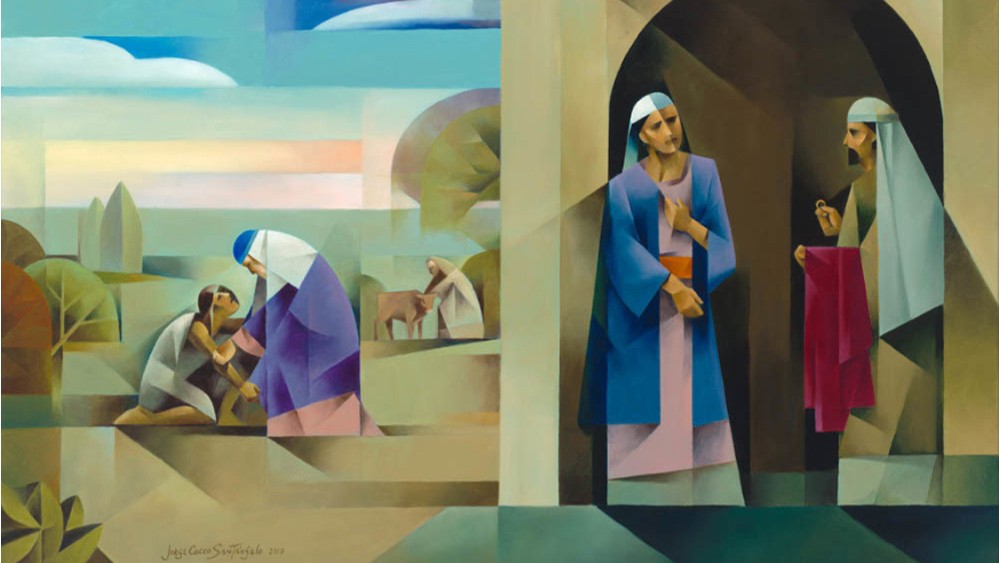
“What do you think? There was a man who had two sons. He went to the first and said, ‘Son, go and work today in the vineyard.’ “‘I will not,’ he answered, but later he changed his mind and went. “Then the father went to the other son and said the same thing. He answered, ‘I will, sir,’ but he did not go. “Which of the two did what his father wanted?” “The first,” they answered. Jesus said to them, “Truly I tell you, the tax collectors and the prostitutes are entering the kingdom of God ahead of you. For John came to you to show you the way of righteousness, and you did not believe him, but the tax collectors and the prostitutes did. And even after you saw this, you did not repent and believe him. Matthew 21:28-32 (NIV) Reflection The first son in Jesus’ story flatly refused his father’s request to work in the vineyard, but later changed his mind and went. The second son gave a polite, spiritual answer—"I will, sir"—but never set foot in the field. Jesus uses this simple story to confront the religious elite who believed their status, heritage, and outward compliance guaranteed them the front row in God's Kingdom. We often believe the narrative that religious credentials, correct terminology, and surface-level agreement make us "first" in line with God. But Jesus drops a bomb on that entitlement: tax collectors and prostitutes—people who initially said "no" to God's ways but later repented—are entering the Kingdom ahead of the polished religious establishment. God isn't looking for polite lip-service that leaves our lives unchanged. He honors the raw, honest heart that turns toward Him, proving that no one is too far gone to step into the Father's vineyard, and no one is too religious to need repentance. Reflection Question Is there an area of your life where you have given God a polite "yes" in words, but have failed to follow through with your actions? Prayer Lord, deliver me from the trap of empty religious performance. Give me an honest heart that moves past lip-service into genuine obedience and active surrender. Amen.

September 28, 2026 • 3 Minute Read
Parable of the Vineyard Workers
“For the kingdom of heaven is like a landowner who went out early in the morning to hire workers for his vineyard. He agreed to pay them a denarius for the day and sent them into his vineyard. “About nine in the morning he went out and saw others standing in the marketplace doing nothing. He told them, ‘You also go and work in my vineyard, and I will pay you whatever is right.’ So they went. “He went out again about noon and about three in the afternoon and did the same thing. About five in the afternoon he went out and found still others standing around. He asked them, ‘Why have you been standing here all day long doing nothing?’ “‘Because no one has hired us,’ they answered. “He said to them, ‘You also go and work in my vineyard.’ “When evening came, the owner of the vineyard said to his foreman, ‘Call the workers and pay them their wages, beginning with the last ones hired and going on to the first.’ “The workers who were hired about five in the afternoon came and each received a denarius. So when those came who were hired first, they expected to receive more. But each one of them also received a denarius. When they received it, they began to grumble against the landowner. ‘These who were hired last worked only one hour,’ they said, ‘and you have made them equal to us who have borne the burden of the work and the heat of the day.’ “But he answered one of them, ‘I am not being unfair to you, friend. Didn’t you agree to work for a denarius? Take your pay and go. I want to give the one who was hired last the same as I gave you. Don’t I have the right to do what I want with my own money? Or are you envious because I am generous?’ “So the last will be first, and the first will be last.” Matthew 20:1-16 (NIV) Reflection We love the law of fairness. We want the world to run on a predictable contract: if you work longer, invest earlier, or suffer more, you deserve a bigger payout. When the earliest workers in Jesus' parable saw those hired at the eleventh hour get paid a full day's wage, they expected a bonus. When they got the same, they felt cheated. They operated on contract law, measuring their worth by what they thought they were owed. Jesus flips this worldview completely on its head. God isn't an employer keeping a strict timesheet, and life with Him isn't a business deal where we negotiate our wages. When we view God through the lens of strict fairness, we end up like the older brother in the prodigal son story—feeling like resentful slaves rather than beloved children. The landowner paid everyone a full denarius because he was generous, not because they earned it. The greatest reward in God’s Kingdom isn't a calculated payout for our labor; it is the privilege of being welcomed into His vineyard and sharing in the generosity of the Father. Reflection Question Where in your spiritual life have you slipped into a "contract mindset"—expecting God to pay you back for your effort rather than resting in His unearned grace? Prayer Father, forgive me for measuring Your goodness through the lens of human fairness. Help me stop keeping score of what I think I am owed, and let me simply marvel at Your scandalous generosity today. Amen.

September 25, 2026 • 2 Minute Read
Parable of the Ten Virgins
“At that time the kingdom of heaven will be like ten virgins who took their lamps and went out to meet the bridegroom. Five of them were foolish and five were wise. The foolish ones took their lamps but did not take any oil with them. The wise ones, however, took oil in jars along with their lamps. The bridegroom was a long time in coming, and they all became drowsy and fell asleep. “At midnight the cry rang out: ‘Here’s the bridegroom! Come out to meet him!’ “Then all the virgins woke up and trimmed their lamps. The foolish ones said to the wise, ‘Give us some of your oil; our lamps are going out.’ “‘No,’ they replied, ‘there may not be enough for both us and you. Instead, go to those who sell oil and buy some for yourselves.’ “But while they were on their way to buy the oil, the bridegroom arrived. The virgins who were ready went in with him to the wedding banquet. And the door was shut. “Later the others also came. ‘Lord, Lord,’ they said, ‘open the door for us!’ “But he replied, ‘Truly I tell you, I don’t know you.’ “Therefore keep watch, because you do not know the day or the hour.” Matthew 25:1-13 (NIV) Reflection Ten virgins set out to meet the bridegroom, but when his arrival was delayed, the difference in their preparation was exposed. Five brought extra oil for their lamps, while five brought just enough to get by in the moment. When the midnight call came, those without oil were caught off guard and left in the dark. When God’s timing takes longer than we expect, it is easy to slip into spiritual apathy—playing it safe, coasting on old experiences, or putting off deep engagement with Him. But true readiness isn't passive waiting; it’s daily, active investment in your relationship with the King. Cultivating "oil" means staying connected to His Spirit today so that when unexpected trials or calls to action arrive, your heart is grounded and ready to move. Reflection Question What daily habit or spiritual practice do you need to cultivate right now to keep your "lamp full" for the long haul? Prayer Jesus, guard my heart against spiritual laziness during seasons of waiting. Teach me to daily seek Your presence and grace so that I am ready to follow You wherever You lead. Amen.
September 24, 2026 • 3 Minute Read
Parable of the Shrewd Manager
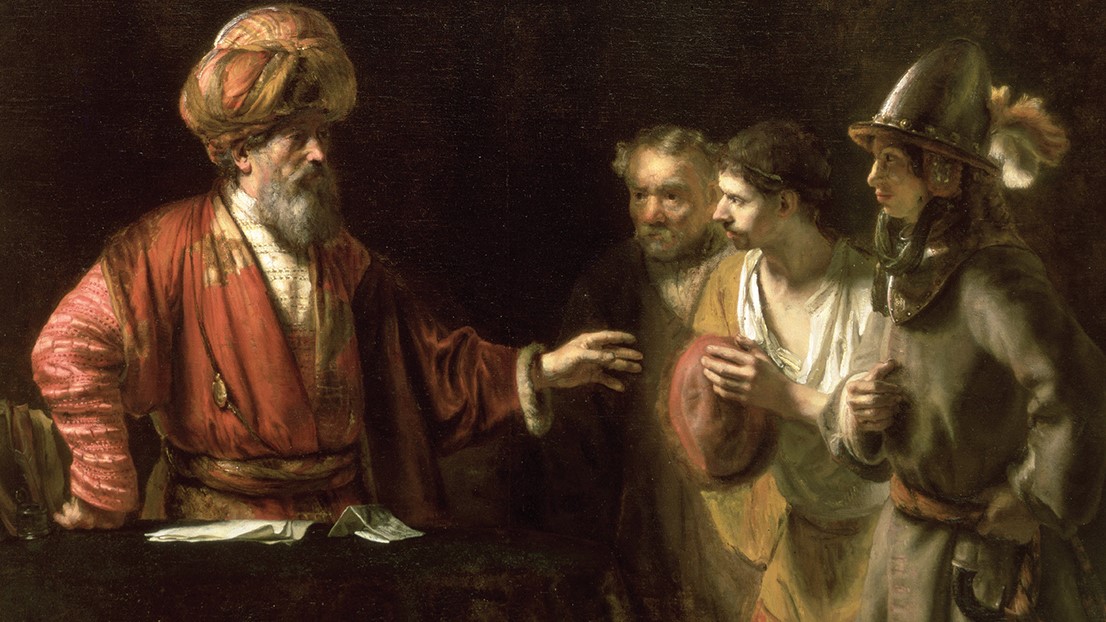
Jesus told his disciples: “There was a rich man whose manager was accused of wasting his possessions. So he called him in and asked him, ‘What is this I hear about you? Give an account of your management, because you cannot be manager any longer.’ “The manager said to himself, ‘What shall I do now? My master is taking away my job. I’m not strong enough to dig, and I’m ashamed to beg— I know what I’ll do so that, when I lose my job here, people will welcome me into their houses.’ “So he called in each one of his master’s debtors. He asked the first, ‘How much do you owe my master?’ “‘Nine hundred gallons of olive oil,’ he replied. “The manager told him, ‘Take your bill, sit down quickly, and make it four hundred and fifty.’ “Then he asked the second, ‘And how much do you owe?’ “‘A thousand bushels of wheat,’ he replied. “He told him, ‘Take your bill and make it eight hundred.’ “The master commended the dishonest manager because he had acted shrewdly. For the people of this world are more shrewd in dealing with their own kind than are the people of the light. I tell you, use worldly wealth to gain friends for yourselves, so that when it is gone, you will be welcomed into eternal dwellings. “Whoever can be trusted with very little can also be trusted with much, and whoever is dishonest with very little will also be dishonest with much. So if you have not been trustworthy in handling worldly wealth, who will trust you with true riches? And if you have not been trustworthy with someone else’s property, who will give you property of your own? “No one can serve two masters. Either you will hate the one and love the other, or you will be devoted to the one and despise the other. You cannot serve both God and money.” Luke 16:1-13 (NIV) Reflection Jesus tells a surprising story about a dishonest manager who, facing unemployment, uses his remaining authority to cut deals for his master's debtors so he’ll have friends when he gets fired. Jesus doesn't praise the man's dishonesty; He praises his shrewdness—his ability to look at temporary, worldly assets and leverage them boldly for his future. We often draw a sharp line between "spiritual" activities and the rest of our ordinary lives. But Jesus challenges us to reverse that separation. Your job, your home, your social network, and your bank account aren't separate from your life with God; they are the exact "minas" given to you to be used resourcefully for eternal good. Kingdom living means looking at every ordinary resource in your hand and asking, How can I use this to bless people and honor God right now? Reflection Question How can you view your ordinary job, house, or hobbies as tools to be leveraged for God's Kingdom rather than just personal assets? Prayer Lord, give me spiritual shrewdness. Help me see all of my everyday tools, assets, and opportunities as gifts to be used boldly for Your eternal purposes. Amen.

September 23, 2026 • 2 Minute Read
Parable of the Wise and Foolish Builders
“Therefore everyone who hears these words of mine and puts them into practice is like a wise man who built his house on the rock. The rain came down, the streams rose, and the winds blew and beat against that house; yet it did not fall, because it had its foundation on the rock. But everyone who hears these words of mine and does not put them into practice is like a foolish man who built his house on sand. The rain came down, the streams rose, and the winds blew and beat against that house, and it fell with a great crash.” Matthew 7:24-27 (NIV) Reflection Both builders in Jesus’ parable heard the exact same words. They knew the script, attended the talk, and held the same information. The difference between the house that stood and the house that collapsed came down to one thing: practice. The foolish builder heard the truth but buried it, treating God's guidance like a static rulebook to agree with rather than a foundation to build on. It is easy to believe the narrative that being a follower of Jesus simply means collecting biblical knowledge and avoiding blatant sin. But Jesus flips this script: active obedience is the only thing that withstands the storms of life. Training for reigning doesn't happen by listening passively; it happens every time you choose the risk of applying His words in your daily friction—at work, in the car rider line, or around your dinner table. Reflection Question What is one specific truth Jesus has spoken to you recently that you’ve agreed with intellectually, but haven't yet put into daily practice? Prayer Father, save me from being a passive listener. Give me the strength and courage to move my feet and build my daily life on the solid rock of Your instructions. Amen.
